Best 100+ Docker Containers for Home Server
Check out this comprehensive list with 100+ docker containers that you can use on your home server in 2026.
Docker is an open-source platform for running applications in containers. Containers bundle your software with everything it needs to run - code, runtime, libraries, and settings - in a single package.
The container ecosystem keeps expanding. This list covers 100+ containers I’ve tested or researched, from established favorites to newer projects worth watching in 2026.
Why bother with Docker on a home server?
- Install anything without breaking your system. Each container runs isolated, so you can experiment freely.
- Lower overhead than VMs. Containers share the host kernel, so you get more apps running on the same hardware.
- Easy rollbacks. Messed something up? Just pull the previous image version.
- Portable setups. Moving to new hardware? Your containers come with you.
Setting Up Your Home Server
🛠️ Hardware Requirements
Here’s what you actually need to run multiple containers:
| Component | Minimum | Recommended | High-Performance |
|---|---|---|---|
| CPU | Quad-core 2.0GHz | Quad-core 2.5GHz+ | 6+ cores, 3.0GHz+ |
| RAM | 8GB | 16-32GB | 64GB+ (especially for LLMs) |
| Storage | 128GB SSD | 512GB NVMe + HDD | 1TB NVMe + multiple HDDs |
| Network | Gigabit Ethernet | 2.5GbE | 10GbE |
What actually matters:
- CPU: Media transcoding eats CPUs for breakfast. Get hardware acceleration (Intel QuickSync, NVIDIA) or accept slow transcodes.
- RAM: Most containers use 50MB-500MB. Database-heavy ones (Nextcloud, Immich) can hit 2GB+.
- Storage: Put your OS and databases on an SSD. Media goes on cheap HDDs.
- Network: Gigabit is the bare minimum for streaming 4K locally.
you can check Best Mini PC For Home Servers to choose one.
💿 Operating System & Network Considerations
Recommended Operating Systems:
| OS | Difficulty | Performance | Docker Support | Best For |
|---|---|---|---|---|
| Ubuntu Server 🟢 | Beginner | Excellent | Native | General use, beginners |
| Debian 🟡 | Intermediate | Excellent | Native | Stability-focused setups |
| Proxmox VE 🔴 | Advanced | Excellent | Via LXC/VM | Mixed virtualization needs |
| TrueNAS Scale 🟡 | Intermediate | Excellent | Native (Apps) | NAS-focused, ZFS storage |
| Unraid 🟢 | Beginner | Excellent | Native | Flexible storage, Docker-native |
| Windows 11 Pro 🟡 | Intermediate | Good | WSL2/Hyper-V | Windows-familiar users |
| macOS 🟡 | Intermediate | Good | Docker Desktop | Mac users, development |
Network basics to sort out first:
- Give your server a static IP (DHCP reservations work too)
- Plan which ports you’ll expose - keep a spreadsheet or you’ll forget
- Run Pi-hole or AdGuard Home for local DNS and ad blocking
- Don’t expose anything to the internet without a reverse proxy
Security stuff you shouldn’t skip:
- SSH keys only, no passwords
- Disable root login
- Run CrowdSec or Fail2ban
- Update regularly (or use Watchtower for containers)
In case you are interested to monitor server resources like CPU, memory, disk space you can check: How To Monitor Server and Docker Resources
🐳 Installing Docker
Quick Installation Steps:
Note: Docker Compose V2 is now the standard. The
version:top-level element in docker-compose files is no longer required and is ignored by modern Docker Compose. You’ll see it in many examples for backward compatibility, but new projects can omit it.
-
Update System Packages
sudo apt update && sudo apt upgrade -y -
Install Docker & Docker Compose
curl -fsSL https://get.docker.com -o get-docker.sh sudo sh get-docker.sh sudo apt install docker-compose-plugin -y -
Configure Docker (Recommended)
# Add user to docker group
sudo usermod -aG docker $USER

# Enable Docker service
sudo systemctl enable docker
sudo systemctl start docker

# Test installation
docker run hello-world
After installation, do this:
- Create custom networks to isolate container groups
- Set up your volume directories somewhere you’ll remember (I use
/opt/docker/) - Back up your compose files to Git - you’ll thank yourself later
For detailed installation instructions, see the official Docker documentation.
Storage tip: Put /var/lib/docker on an SSD if you can. Containers pulling images and writing logs will thrash a spinning disk.
If you are interested to see some free cool open source self hosted apps you can check toolhunt.net self hosted section.
🚀 Getting Started - Essential Containers
If you’re starting from scratch, these 8 containers will get you a solid foundation:
| Container | Category | Difficulty | Performance Impact | Why Essential |
|---|---|---|---|---|
| Jellyfin ⭐ | Media | 🟡 Intermediate | 🔴 High | Free, open-source media streaming |
| qBittorrent ⭐ | Downloads | 🟢 Beginner | 🟡 Medium | Feature-rich torrent client with web UI |
| Filebrowser ⭐ | Files | 🟢 Beginner | 🟢 Low | Simple web-based file manager |
| Homepage ⭐ | Dashboard | 🟢 Beginner | 🟢 Low | Modern dashboard with Docker integration |
| CrowdSec ⭐ | Security | 🟡 Intermediate | 🟢 Low | Community-driven intrusion prevention |
| Pi-hole ⭐ | Network | 🟢 Beginner | 🟢 Low | Network-wide ad blocking |
| Dockge ⭐ | Management | 🟢 Beginner | 🟢 Low | Docker Compose stack manager |
| Beszel | Monitoring | 🟢 Beginner | 🟢 Low | Lightweight server monitoring |
Quick Start Docker Compose
Here’s a starter docker-compose.yml with the essential services:
services:
  pihole:
    image: pihole/pihole
    container_name: pihole
    ports:
      - "53:53/tcp"
      - "53:53/udp"
      - "8080:80/tcp"
    environment:
      TZ: 'America/New_York'
      WEBPASSWORD: 'your_secure_password'
    volumes:
      - pihole_config:/etc/pihole
      - pihole_dnsmasq:/etc/dnsmasq.d
    restart: unless-stopped

  homepage:
    image: ghcr.io/gethomepage/homepage:latest
    container_name: homepage
    environment:
      - TZ=America/New_York
    volumes:
      - ./homepage-config:/app/config
      - /var/run/docker.sock:/var/run/docker.sock:ro
    ports:
      - "3000:3000"
    restart: unless-stopped

  dockge:
    image: louislam/dockge:1
    container_name: dockge
    volumes:
      - /var/run/docker.sock:/var/run/docker.sock
      - ./dockge-data:/app/data
      - ./dockge-stacks:/opt/stacks
    ports:
      - "5001:5001"
    restart: unless-stopped

volumes:
  pihole_config:
  pihole_dnsmasq:
🎯 Recommended Setup Order:
- Dockge - Set up container management first
- Pi-hole - Network-wide ad blocking
- Homepage - Dashboard for all services
- Filebrowser - Web-based file access
- Jellyfin - Media streaming
- qBittorrent - Download client
- CrowdSec - Security layer
- Beszel - Resource monitoring
📋 Container Categories
Jump to the category you’re interested in:
- 🎬 Media Management - Plex, Jellyfin, Emby, Sonarr, Radarr, Prowlarr, Bazarr, Overseerr, Jackett, Transmission, qBittorrent
- 📁 File Sharing & Sync - Nextcloud, Syncthing, Seafile, RustFS, ownCloud, Filebrowser, SFTPGo
- 🤖 AI Applications - Ollama with OpenWebUI, Flowise, Langflow, Langfuse, LiteLLM
- 🏠 Home Automation - n8n, Home Assistant, Node-RED
- 🌐 Network Management - Pi-hole, AdGuard Home, Tailscale, NetBird, Cloudflare Tunnel, Unbound, Traefik, Nginx Proxy Manager, Caddy, Portainer, Dockge
- 📊 Monitoring & Analytics - Netdata, Uptime Kuma, Beszel
- 🔐 Security & Privacy - Vaultwarden, OpenVPN, WireGuard, Fail2Ban, CrowdSec, Authentik, Authelia, SearXNG
- 📝 Productivity - Notifuse, Bookstack, Joplin, Kanboard, Wekan, Docmost, Stirling PDF, IT-Tools, Documenso
- 💻 Development - Jenkins, Gitea, Code-Server, Dokploy
- 🗄️ Database - MariaDB, PostgreSQL, Valkey
- 💾 Backup & Recovery - Duplicati, Kopia, Restic
- 💰 Personal Finance - Firefly III, GnuCash, HomeBank
- 📸 Photography & Images - PhotoPrism, Immich
- 📚 E-book Management - Calibre-web, Komga, Kavita
- 📊 Database Solutions (Airtable Alternatives) - Baserow, NocoDB, Teable
- 🎮 Game Servers - Minecraft Server, Valheim Server, Pterodactyl Panel
- 💬 Communication - Mattermost, Rocket.Chat, Jitsi Meet, Matrix Synapse
- 📄 Document Management - Paperless-ngx
- 🌐 Web Hosting - WordPress, Ghost
- 🏠 Personal Dashboard - Homepage, Heimdall, Organizr, Homer
- 📰 RSS Feeds - FreshRSS, Tiny Tiny RSS, Miniflux
- 🌤️ Weather Monitoring - Weewx, Meteobridge
- ⏰ Time Tracking - Kimai, TimeTagger
- 🔑 Password Management - Passbolt, Vaultwarden
- 📞 VoIP - Asterisk, FreePBX
🎬 Media Management Containers
This is probably why most people start a home server - to stream their own media library.
Plex ⭐
Difficulty: 🟡 Intermediate | Performance Impact: 🔴 High | Popularity: Very High
Plex organizes and streams your media collection. It’s the most polished option but some features require a paid Plex Pass.
Key features:
- Automatic metadata fetching
- Transcoding for various devices
- User management and sharing
Docker image: linuxserver/plex
Jellyfin ⭐
Difficulty: 🟡 Intermediate | Performance Impact: 🔴 High | Popularity: Very High
Jellyfin does most of what Plex does but it’s completely free and open source. No account required, no telemetry.
Key features:
- Completely free and open-source
- No central servers or tracking
- Supports live TV and DVR
Docker image: jellyfin/jellyfin
Emby
Difficulty: 🟡 Intermediate | Performance Impact: 🔴 High | Popularity: Medium
Emby sits between Plex and Jellyfin. Partially open source with a premium tier.
Key features:
- Live TV and DVR support
- Parental controls
- Mobile sync (premium feature)
Docker image: emby/embyserver
Comparison Table
| Feature | Plex | Jellyfin | Emby |
|---|---|---|---|
| Cost | Free (with premium option) | Free | Free (with premium option) |
| Open-source | No | Yes | Partially |
| Live TV | Yes (with Plex Pass) | Yes | Yes |
| Mobile sync | Yes (with Plex Pass) | No | Yes (with premium) |
Sonarr ⭐
Difficulty: 🟡 Intermediate | Performance Impact: 🟡 Medium | Popularity: Very High
Sonarr is an automated TV show downloader and manager.
Key features:
- Automated TV show searching and downloading
- Calendar view of upcoming episodes
- Integration with media servers and download clients
Docker image: linuxserver/sonarr
Radarr ⭐
Difficulty: 🟡 Intermediate | Performance Impact: 🟡 Medium | Popularity: Very High
Radarr is similar to Sonarr but focuses on movies instead of TV shows.
Key features:
- Automated movie searching and downloading
- Integration with media servers and download clients
- Customizable quality profiles
Docker image: linuxserver/radarr
Prowlarr ⭐
Difficulty: 🟡 Intermediate | Performance Impact: 🟢 Low | Popularity: Very High
Prowlarr is the modern indexer manager for the *arr stack, designed to integrate seamlessly with Sonarr, Radarr, Lidarr, and Readarr.
Key features:
- Native integration with all *arr applications
- Automatic sync of indexers to connected apps
- Built-in search functionality
- Torrent and Usenet support
- Active development and modern UI
Docker image: linuxserver/prowlarr
2026 Note: Prowlarr has largely replaced Jackett for *arr stack users due to its tighter integration and simpler configuration. New users should start with Prowlarr.
Bazarr ⭐
Difficulty: 🟡 Intermediate | Performance Impact: 🟢 Low | Popularity: Very High
Bazarr is a companion application to Sonarr and Radarr that manages and downloads subtitles.
Key features:
- Automatic subtitle downloading
- Integration with Sonarr and Radarr
- Support for multiple subtitle providers
- Subtitle synchronization and correction
- Manual search and download
Docker image: linuxserver/bazarr
Overseerr ⭐
Difficulty: 🟡 Intermediate | Performance Impact: 🟢 Low | Popularity: Very High
Overseerr is a request management and media discovery tool for Plex ecosystems. For Jellyfin users, Jellyseerr is available as a fork.
Key features:
- User-friendly media request interface
- Integration with Plex, Sonarr, and Radarr
- User management and permissions
- Automatic request processing
- Beautiful, modern UI
Docker image: linuxserver/overseerr or fallenbagel/jellyseerr
Jackett
Difficulty: 🟡 Intermediate | Performance Impact: 🟢 Low | Popularity: Medium
Jackett works as a proxy server between your media management apps and torrent trackers.
Key features:
- Supports a wide range of torrent trackers
- Provides a unified search interface
- Integrates with Sonarr, Radarr, and Lidarr
Docker image: linuxserver/jackett
Note: While Jackett is still maintained, consider using Prowlarr for new setups as it offers better integration with the *arr ecosystem.
Transmission
Difficulty: 🟢 Beginner | Performance Impact: 🟡 Medium | Popularity: Medium
Transmission is a lightweight and user-friendly BitTorrent client.
Key features:
- Web interface for remote management
- Scheduling and bandwidth controls
- Support for magnet links
Docker image: linuxserver/transmission
qBittorrent ⭐
Difficulty: 🟢 Beginner | Performance Impact: 🟡 Medium | Popularity: High
qBittorrent is another popular BitTorrent client with a feature-rich web interface.
Key features:
- Built-in search engine
- RSS feed support
- IP filtering and encryption
Docker image: linuxserver/qbittorrent
The typical setup: Prowlarr manages your indexers, feeds them to Sonarr (TV) and Radarr (movies), which tell qBittorrent what to download. Jellyfin or Plex streams the result. Bazarr handles subtitles, Overseerr lets family members request content without bothering you.
📁 File Sharing and Sync Containers
Host your own cloud storage instead of paying Google or Dropbox.
Nextcloud ⭐
Difficulty: 🟡 Intermediate | Performance Impact: 🟡 Medium | Popularity: Very High
Nextcloud is the kitchen sink of self-hosted file sync. Does everything - files, calendar, contacts, notes, office docs. Can be slow with large libraries but the ecosystem is massive.
Key features:
- File synchronization across devices
- Collaborative document editing
- Calendar and contact management
- Built-in chat and video calling
Docker image: nextcloud
Syncthing ⭐
Difficulty: 🟡 Intermediate | Performance Impact: 🟢 Low | Popularity: High
Syncthing syncs files peer-to-peer between your devices. No central server, no account, just direct encrypted sync. Set it and forget it.
Key features:
- Decentralized and peer-to-peer
- End-to-end encryption
- Cross-platform support
- No central server required
Docker image: syncthing/syncthing
Seafile ⭐
Difficulty: 🟡 Intermediate | Performance Impact: 🟢 Low | Popularity: High
Seafile is blazing fast for file sync. If Nextcloud feels sluggish, Seafile won’t. The catch: files are stored in a proprietary format, so you can’t just browse them on disk.
Key features:
- File versioning and snapshots
- Selective sync
- Two-factor authentication
- Built-in wiki
- High-performance sync engine (C-based daemons with chunking)
Docker image: seafileltd/seafile-mc
Performance Note: Seafile utilizes C-based daemons and a chunking mechanism to achieve sync speeds that often saturate Gigabit and 2.5GbE links, significantly outperforming Nextcloud for large file transfers. However, it stores files in a proprietary block format, meaning the data is not directly accessible on the disk without the Seafile server.
RustFS ⭐
Difficulty: 🟡 Intermediate | Performance Impact: 🟢 Low | Popularity: Growing
RustFS is a modern S3-compatible object storage solution written in Rust, serving as an excellent alternative to MinIO.
Key features:
- S3-compatible API
- High performance with low memory footprint
- Written in Rust for safety and speed
- Simple deployment
- Suitable for backup destinations and application storage
Docker image: rustfs/rustfs
For a detailed guide on how to set up RustFS, check out this tutorial: How to Self-Host RustFS
ownCloud
Difficulty: 🟡 Intermediate | Performance Impact: 🟡 Medium | Popularity: Medium
ownCloud is another popular open-source file sync and share platform that offers a range of features for personal and business use.
Key features:
- File sharing and synchronization
- Collaborative editing
- Mobile and desktop clients
- Extensible through apps
Docker image: owncloud/server
Filebrowser ⭐
Difficulty: 🟢 Beginner | Performance Impact: 🟢 Low | Popularity: High
Filebrowser is a lightweight, web-based file manager that allows you to manage files and directories on your server through a clean, easy-to-use interface.
Key features:
- Simple and intuitive web interface
- File upload and download
- User management with configurable permissions
- Customizable look and feel
Docker image: filebrowser/filebrowser
For a detailed guide on how to deploy Filebrowser using Docker, check out this tutorial: How to Deploy Filebrowser with Docker
SFTPGo
Difficulty: 🔴 Advanced | Performance Impact: 🟢 Low | Popularity: Medium
SFTPGo is a fully featured and highly configurable SFTP server with optional HTTP/S, FTP/S and WebDAV support.
Key features:
- Virtual users and folders
- Bandwidth throttling
- Public key and password authentication
- Web admin interface
- REST API
- Quota restrictions
Docker image: drakkan/sftpgo
Comparison Table
| Feature | Nextcloud | Syncthing | Seafile | ownCloud | Filebrowser | SFTPGo | RustFS |
|---|---|---|---|---|---|---|---|
| File sync | Yes | Yes | Yes | Yes | No | No | No |
| Collaboration tools | Yes | No | Limited | Yes | No | No | No |
| Self-hosted | Yes | Yes | Yes | Yes | Yes | Yes | Yes |
| Mobile apps | Yes | Yes | Yes | Yes | No | No | No |
| End-to-end encryption | Yes | Yes | Yes | Yes | No | Yes | No |
| Open-source | Yes | Yes | Yes | Yes | Yes | Yes | Yes |
| Web-based file manager | Yes | No | Yes | Yes | Yes | Yes | Yes |
| S3 Compatible | Yes* | No | No | Yes* | No | Yes | Yes |
| Large file performance | Medium | High | Very High | Medium | N/A | High | High |
Pick based on your priorities: Nextcloud for features, Seafile for speed, Syncthing for simplicity, Filebrowser for basic web access.
🤖 AI Applications Containers
Run large language models locally without sending your data to OpenAI or Anthropic. You’ll need decent hardware - at least 16GB RAM, preferably with a GPU.
Ollama with OpenWebUI ⭐
Difficulty: 🟡 Intermediate | Performance Impact: 🔴 High | Popularity: Very High
Ollama is an open-source project that allows you to run large language models locally. OpenWebUI provides a user-friendly interface for interacting with Ollama.
Key features:
- Run various large language models locally
- User-friendly web interface
- Customizable prompts and settings
- No need for API keys or internet connection for inference
Docker images:
ollama/ollamaghcr.io/open-webui/open-webui:main
For a detailed guide on how to install Ollama with OpenWebUI using Docker, check out this tutorial: How to Install Ollama with Docker
Flowise ⭐
Difficulty: 🟡 Intermediate | Performance Impact: 🟡 Medium | Popularity: High
Flowise is an open-source UI visual tool for building LLM apps, chatbots, and agents with a drag-and-drop interface.
Key features:
- Visual workflow builder
- Integration with various AI models and tools
- Customizable components
- API generation for created flows
Docker image: flowiseai/flowise
For a step-by-step installation guide, see: How to Install Flowise AI
Langflow
Difficulty: 🔴 Advanced | Performance Impact: 🟡 Medium | Popularity: Medium
Langflow is an GUI for LangChain, designed to provide an easy way to experiment and prototype flows.
Key features:
- Drag-and-drop interface for LangChain components
- Code export functionality
- Easy integration with various LLMs and tools
- Customizable nodes and edges
Docker image: logspace/langflow
Learn how to set up Langflow with this guide: How to Install Langflow with Docker
Langfuse
Difficulty: 🔴 Advanced | Performance Impact: 🟢 Low | Popularity: Medium
Langfuse is an open-source observability and analytics solution for LLM applications.
Key features:
- Tracing and logging for LLM interactions
- Performance monitoring and analytics
- Integration with popular LLM frameworks
- Customizable dashboards
Docker image: langfuse/langfuse
For installation instructions, check out: How to Install Langfuse with Docker
LiteLLM
Difficulty: 🔴 Advanced | Performance Impact: 🟢 Low | Popularity: Medium
LiteLLM is a lightweight package to standardize inputs and outputs across LLM providers.
Key features:
- Unified interface for multiple LLM providers
- Caching and rate limiting
- Logging and monitoring
- Easy integration with various AI applications
Docker image: ghcr.io/berriai/litellm
For a guide on setting up LiteLLM, see: How to Install LiteLLM with Docker
Comparison Table
| Feature | Ollama + OpenWebUI | Flowise | Langflow | Langfuse | LiteLLM |
|---|---|---|---|---|---|
| Primary Function | Local LLM Inference | LLM App Builder | LangChain GUI | LLM Observability | LLM Standardization |
| User Interface | Web-based | Web-based | Web-based | Web-based | API |
| Local Models | Yes | No | No | N/A | Depends on setup |
| Visualization | Basic chat | Flow diagram | Flow diagram | Analytics dashboards | N/A |
| Extensibility | Limited | High | High | High | High |
Start with Ollama + OpenWebUI to get a ChatGPT-like experience locally. Add Flowise if you want to build AI workflows without coding.
🏠 Home Automation Containers
Automate your smart home and connect services together.
n8n ⭐
Difficulty: 🟡 Intermediate | Performance Impact: 🟢 Low | Popularity: Very High
n8n is workflow automation done right. Visual editor, 400+ integrations, and you own your data. Think Zapier but self-hosted.
Key features:
- Visual workflow builder with 400+ integrations
- Self-hosted with full data control
- Native AI/LLM workflow capabilities
- Code nodes for custom JavaScript/Python
- Credential management and encryption
- Active community and extensive documentation
Docker image: n8nio/n8n
For a detailed guide on how to set up n8n, check out this tutorial: How to Self-Host n8n for Workflow Automation
2026 Trend: n8n has become the preferred choice for workflow automation due to its modern UI and extensive integrations, while Node-RED remains popular for IoT-focused automation.
Home Assistant ⭐
Difficulty: 🟡 Intermediate | Performance Impact: 🟡 Medium | Popularity: Very High
Home Assistant controls your smart home devices locally. Over 1,000 integrations, works without internet. The UI takes some getting used to but it’s extremely capable.
Key features:
- Supports over 1,000 integrations
- Powerful automation engine
- Local processing for faster response times
- Customizable dashboard
Docker image: homeassistant/home-assistant
Node-RED ⭐
Difficulty: 🟡 Intermediate | Performance Impact: 🟢 Low | Popularity: High
Node-RED is a flow-based programming tool for connecting hardware devices, APIs, and online services.
Key features:
- Visual programming interface
- Extensive library of nodes
- Easy integration with IoT devices
- Customizable dashboard
Docker image: nodered/node-red
Comparison Table
| Feature | n8n | Home Assistant | Node-RED |
|---|---|---|---|
| Primary Function | Workflow Automation | Home Automation Platform | Flow-based Programming |
| User Interface | Web-based | Web-based | Web-based |
| Automation | Yes | Yes | Yes |
| Device Support | Via integrations | Extensive | Extensive |
| Customization | High | High | High |
| AI Integration | Native | Via add-ons | Via nodes |
Home Assistant handles device control, n8n handles workflow automation between web services. They complement each other well.
🌐 Network Management Containers
Block ads, manage DNS, set up VPNs, and reverse proxy your services.
Pi-hole ⭐
Difficulty: 🟢 Beginner | Performance Impact: 🟢 Low | Popularity: Very High
Pi-hole blocks ads and trackers for your entire network at the DNS level. Point your router at it and ads disappear from every device.
Key features:
- Network-wide ad blocking
- Customizable blocklists
- Detailed statistics and reporting
- DHCP server functionality
Docker image: pihole/pihole
AdGuard Home ⭐
Difficulty: 🟢 Beginner | Performance Impact: 🟢 Low | Popularity: Very High
AdGuard Home does what Pi-hole does but with DNS-over-HTTPS built in and a nicer interface. Single binary, simpler to set up.
Key features:
- Network-wide ad and tracker blocking
- DNS-over-HTTPS and DNS-over-TLS support
- Parental controls and safe search enforcement
- Single binary deployment (simpler than Pi-hole)
- Built-in DHCP server
- Modern, responsive web interface
Docker image: adguard/adguardhome
Pi-hole vs AdGuard Home: Both are excellent choices. AdGuard Home offers a simpler single-binary architecture and built-in encrypted DNS, while Pi-hole has a larger community and more extensive documentation. Many users prefer AdGuard Home for new setups in 2026.
Tailscale ⭐
Difficulty: 🟢 Beginner | Performance Impact: 🟢 Low | Popularity: Very High
Tailscale connects your devices in a secure mesh network. No port forwarding, works behind NAT, takes 5 minutes to set up. Free for up to 100 devices.
Key features:
- Zero-configuration setup
- Works behind NAT without port forwarding
- Built on WireGuard for speed and security
- MagicDNS for easy device discovery
- Access control lists (ACLs)
- Free tier for personal use (up to 100 devices)
Docker image: tailscale/tailscale
2026 Standard: Tailscale has become the go-to solution for remote access, often replacing complex OpenVPN or manual WireGuard setups. For self-hosted control plane, consider Headscale.
NetBird
Difficulty: 🟡 Intermediate | Performance Impact: 🟢 Low | Popularity: Growing
NetBird is an emerging competitor to Tailscale, offering a kernel-level WireGuard implementation with a robust access control dashboard.
Key features:
- Zero Trust network access
- Device posture checks (e.g., “Is the antivirus running?”)
- Self-hostable control plane
- Kernel-level WireGuard for maximum performance
- Fine-grained access policies
Docker image: netbirdio/netbird
2026 Outlook: NetBird is gaining traction for users who want self-hosted control with enterprise-grade Zero Trust policies.
Cloudflare Tunnel ⭐
Difficulty: 🟡 Intermediate | Performance Impact: 🟢 Low | Popularity: Very High
Cloudflare Tunnel (cloudflared) creates secure tunnels to expose your services without opening ports on your router.
Key features:
- No port forwarding required
- Automatic SSL/TLS
- DDoS protection through Cloudflare
- Access policies and authentication
- Free tier available
Docker image: cloudflare/cloudflared
Security Tip: Cloudflare Tunnel is excellent for exposing specific services publicly without exposing your home IP or opening firewall ports.
Unbound
Difficulty: 🟡 Intermediate | Performance Impact: 🟢 Low | Popularity: Medium
Unbound is a validating, recursive, and caching DNS resolver.
Key features:
- DNSSEC validation
- Improved privacy and security
- Caching for faster DNS resolution
- Can work alongside Pi-hole for enhanced functionality
Docker image: mvance/unbound
Traefik ⭐
Difficulty: 🔴 Advanced | Performance Impact: 🟡 Medium | Popularity: High
Traefik is a modern HTTP reverse proxy and load balancer that makes deploying microservices easy.
Key features:
- Automatic SSL certificate generation with Let’s Encrypt
- Dynamic configuration
- Docker integration
- Metrics and monitoring
Docker image: traefik
Nginx Proxy Manager ⭐
Difficulty: 🟡 Intermediate | Performance Impact: 🟢 Low | Popularity: Very High
Nginx Proxy Manager provides a user-friendly interface to manage Nginx proxy hosts with SSL termination.
Key features:
- Easy-to-use web interface
- Automatic SSL certificate management
- Access lists and basic authentication
- Docker container support
Docker image: jc21/nginx-proxy-manager
Caddy
Difficulty: 🟢 Beginner | Performance Impact: 🟢 Low | Popularity: High
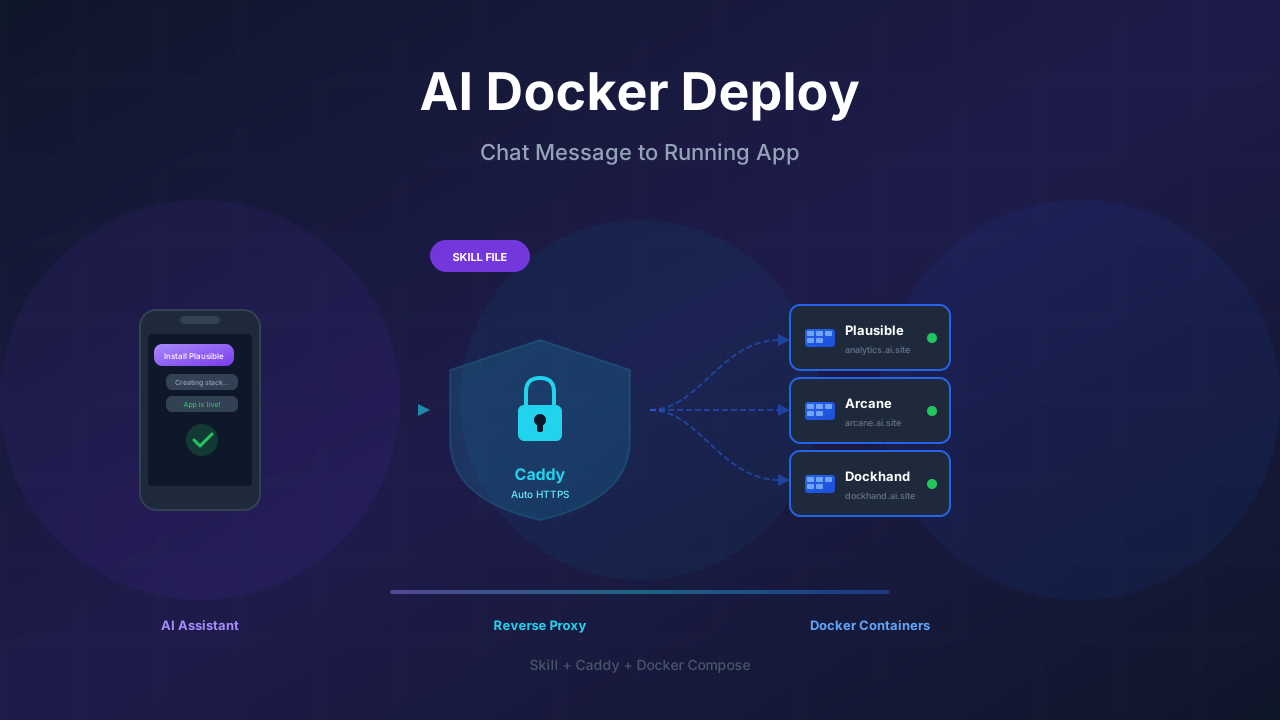
Caddy is a powerful, enterprise-ready web server with automatic HTTPS, making it increasingly popular as a simpler alternative to Nginx Proxy Manager and Traefik.
Key features:
- Automatic HTTPS out of the box (no configuration needed)
- Simple Caddyfile configuration
- HTTP/3 support
- Reverse proxy with load balancing
- Extensible with plugins
Docker image: caddy
Why Caddy? For users who find Traefik’s labels confusing or NPM’s interface limiting, Caddy offers the simplest path to automatic HTTPS with minimal configuration.
Portainer ⭐
Difficulty: 🟢 Beginner | Performance Impact: 🟢 Low | Popularity: Very High
Portainer is a lightweight management UI for Docker environments.
Key features:
- Web-based Docker management
- Container and image management
- User authentication and role-based access control
- Monitoring and logging
Docker image: portainer/portainer-ce
Dockge ⭐
Difficulty: 🟢 Beginner | Performance Impact: 🟢 Low | Popularity: High
Dockge is a simple, lightweight, and powerful Docker compose stack manager and UI.
Key features:
- User-friendly web interface for managing Docker compose stacks
- Easy deployment and management of Docker containers
- Built-in code editor for compose files
- Support for environment variables and secrets
Docker image: louislam/dockge
For a detailed guide on how to install and set up Dockge, check out this tutorial: How to Install Dockge
Comparison Table
| Feature | Pi-hole | AdGuard Home | Traefik | Nginx Proxy Manager | Caddy | Portainer | Tailscale |
|---|---|---|---|---|---|---|---|
| Primary Function | Ad Blocking | Ad Blocking | Reverse Proxy | Reverse Proxy | Reverse Proxy | Docker Management | VPN/Mesh |
| User Interface | Web-based | Web-based | Web-based | Web-based | Config file | Web-based | Web/CLI |
| SSL Management | No | No | Yes | Yes | Auto | No | Auto (internal) |
| Docker Integration | N/A | N/A | Yes | Yes | Yes | Yes | Yes |
| Ease of Use | High | Very High | Medium | High | Very High | High | Very High |
| Encrypted DNS | Via Unbound | Built-in | N/A | N/A | N/A | N/A | MagicDNS |
Typical setup: AdGuard Home or Pi-hole for DNS/ad blocking, Tailscale for remote access, Nginx Proxy Manager or Caddy for reverse proxy, Dockge to manage your stacks.
📊 Monitoring and Analytics Containers
Keep an eye on what your server is doing and know when things break.
Netdata ⭐
Difficulty: 🟢 Beginner | Performance Impact: 🟢 Low | Popularity: High
Netdata shows real-time metrics for everything on your system. Per-second granularity, zero config, just works.
Key features:
- Real-time, per-second metrics
- Highly optimized data collection and visualization
- Automatic configuration and zero maintenance
- Extensible through plugins
Docker image: netdata/netdata
Uptime Kuma ⭐
Difficulty: 🟢 Beginner | Performance Impact: 🟢 Low | Popularity: Very High
Uptime Kuma pings your services and tells you when they go down. Clean UI, tons of notification options (Discord, Slack, Telegram, email). Everyone running a home server should have this.
Key features:
- Beautiful, modern dashboard
- Multiple monitor types (HTTP, TCP, Ping, DNS, Docker, etc.)
- Notification integrations (Discord, Slack, Telegram, Email, etc.)
- Status pages for public or private use
- Multi-language support
- Low resource usage
Docker image: louislam/uptime-kuma
For a detailed guide including Beszel and Uptime Kuma setup, check out: How To Monitor Server and Docker Resources
2026 Essential: Uptime Kuma is now considered essential infrastructure for any home server. It’s simple to set up and provides immediate value for monitoring all your services.
Beszel
Difficulty: 🟢 Beginner | Performance Impact: 🟢 Low | Popularity: Medium
Beszel is lightweight server monitoring with a clean interface. Uses public key auth for agents, supports multiple servers, low resource usage.
Key features:
- Real-time server metrics monitoring
- Notifications
- Docker container statistics
- Custom notification channels
- Low resource footprint
- Simple deployment process
- Public key authentication
- Multi-server support
Docker image: henrygd/beszel
For more details on server monitoring you can check: How To Monitor Server and Docker Resources:CPU,Memory…
Comparison Table
| Feature | Netdata | Uptime Kuma | Beszel |
|---|---|---|---|
| Primary Function | Real-time Monitoring | Uptime Monitoring | Resource Monitoring |
| Data Sources | Self | Self | Agent-based |
| Visualization | Yes | Yes | Yes |
| Alerting | Yes | Yes | Yes |
| Ease of Setup | Very Easy | Very Easy | Very Easy |
| Status Pages | No | Yes | No |
Uptime Kuma tells you when stuff breaks. Beszel or Netdata shows you why.
🔐 Security and Privacy Containers
Password managers, VPNs, intrusion prevention, and private search.
Vaultwarden (Bitwarden) ⭐
Difficulty: 🟡 Intermediate | Performance Impact: 🟢 Low | Popularity: Very High
Vaultwarden runs Bitwarden on your own server with minimal resources. Works with all official Bitwarden apps and browser extensions. Much lighter than the official server.
Key features:
- Full compatibility with official Bitwarden clients
- End-to-end encryption
- Self-hosting for complete data control
- Cross-platform support (desktop, mobile, browser extensions)
- Secure password sharing and organization
- Low resource requirements compared to official server
Docker image: vaultwarden/server
Note: For self-hosting, Vaultwarden is preferred over the official Bitwarden server due to its significantly lower resource requirements while maintaining full client compatibility.
OpenVPN
Difficulty: 🔴 Advanced | Performance Impact: 🟡 Medium | Popularity: Medium
OpenVPN is a popular open-source VPN solution that allows you to create secure connections to your home network from remote locations.
Key features:
- Strong encryption and authentication
- Supports various authentication methods
- Cross-platform compatibility
- Extensible through plugins
Docker image: kylemanna/openvpn
WireGuard ⭐
Difficulty: 🟡 Intermediate | Performance Impact: 🟢 Low | Popularity: High
WireGuard is a modern, fast, and secure VPN protocol that aims to be simpler and more efficient than traditional VPN solutions.
Key features:
- Lightweight and high-performance
- Strong, modern cryptography
- Simple configuration
- Cross-platform support
Docker image: linuxserver/wireguard
Fail2Ban ⭐
Difficulty: 🟡 Intermediate | Performance Impact: 🟢 Low | Popularity: High
Fail2Ban is an intrusion prevention software framework that protects computer servers from brute-force attacks.
Key features:
- Monitors log files for suspicious activity
- Automatically blocks IP addresses of potential attackers
- Customizable rules and actions
- Supports various services (SSH, Apache, etc.)
Docker image: crazymax/fail2ban
CrowdSec ⭐
Difficulty: 🟡 Intermediate | Performance Impact: 🟢 Low | Popularity: Very High
CrowdSec is Fail2ban for 2026. Detects attacks, blocks IPs, and shares threat intelligence with other CrowdSec users. When someone attacks one user, everyone benefits from the block.
Key features:
- Community-driven threat intelligence
- Behavior-based detection (not just log parsing)
- Bouncers for various services (Nginx, Traefik, iptables, etc.)
- Central console for multi-server management
- Lower false positive rate than Fail2Ban
- Real-time threat sharing with global community
Docker image: crowdsecurity/crowdsec
Fail2Ban vs CrowdSec (2026): CrowdSec is modernizing the intrusion prevention space. While Fail2Ban works on isolated log analysis, CrowdSec shares threat intelligence across its community, meaning an attack on one server helps protect all others. For new setups, CrowdSec is increasingly recommended.
Authentik ⭐
Difficulty: 🔴 Advanced | Performance Impact: 🟡 Medium | Popularity: Very High
Authentik is an open-source Identity Provider focused on flexibility and versatility, providing SSO capabilities for your home lab.
Key features:
- Single Sign-On (SSO) for all services
- SAML, OAuth2, OIDC, LDAP support
- Multi-factor authentication (TOTP, WebAuthn, etc.)
- User management and self-service
- Application proxy for legacy apps
- Beautiful, modern admin interface
Docker image: ghcr.io/goauthentik/server
Why SSO in 2026? As home labs grow beyond 10-15 services, managing separate credentials becomes unsustainable. Authentik or Authelia (lighter alternative) provides unified authentication across all your services.
Authelia
Difficulty: 🟡 Intermediate | Performance Impact: 🟢 Low | Popularity: High
Authelia is a lightweight authentication and authorization server providing 2FA and SSO for your applications via a reverse proxy.
Key features:
- Single Sign-On with session management
- Two-factor authentication (TOTP, Duo, WebAuthn)
- Access control policies
- Works with Nginx, Traefik, Caddy, HAProxy
- Lightweight single binary
- Simple YAML configuration
Docker image: authelia/authelia
Authentik vs Authelia: Authelia is lighter and simpler, ideal for basic SSO needs. Authentik is more feature-rich with a visual flow designer and LDAP/SAML support, better for complex setups.
SearXNG ⭐
Difficulty: 🟢 Beginner | Performance Impact: 🟢 Low | Popularity: High
SearXNG is a free, open-source metasearch engine that aggregates results from multiple search engines without storing your search data or tracking you.
Key features:
- Privacy-focused search without tracking
- Aggregates results from 70+ search engines
- No ads or user profiling
- Customizable search categories and preferences
- Self-hosted for complete privacy control
Docker image: searxng/searxng
For a detailed guide on how to install SearXNG using Docker, check out this tutorial: How to Self-Host SearXNG for Private Search
Comparison Table
| Feature | Vaultwarden | WireGuard | Tailscale | Fail2Ban | CrowdSec | Authentik | SearXNG |
|---|---|---|---|---|---|---|---|
| Primary Function | Password Management | VPN | Mesh VPN | Intrusion Prevention | IPS + Threat Intel | SSO/IdP | Private Search |
| Encryption | Yes | Yes | Yes | N/A | N/A | Yes | No |
| Self-hosting | Yes | Yes | Partial | Yes | Yes | Yes | Yes |
| Ease of Setup | Easy | Medium | Very Easy | Medium | Easy | Advanced | Easy |
| Cross-platform | Yes | Yes | Yes | Linux-focused | Multi-platform | Yes | Yes |
| Community Intel | N/A | N/A | N/A | No | Yes | N/A | N/A |
Start with Vaultwarden for passwords and CrowdSec for intrusion prevention. Add Authentik if you want single sign-on across your services.
📝 Productivity Containers
Notes, wikis, project boards, PDF tools, and more.
Notifuse
Difficulty: 🟡 Intermediate | Performance Impact: 🟢 Low | Popularity: Growing
Notifuse is a self-hosted newsletter and email marketing platform, serving as an open-source alternative to Mailchimp or ConvertKit.
Key features:
- Newsletter creation and management
- Subscriber management
- Email campaign analytics
- Template builder
- Self-hosted for data privacy
Docker image: Check official documentation
For a detailed guide on how to set up Notifuse, check out this tutorial: How to Self-Host Notifuse Newsletter
Bookstack ⭐
Difficulty: 🟢 Beginner | Performance Impact: 🟢 Low | Popularity: High
Bookstack is a free and open-source wiki system that provides a simple, self-hosted platform for organizing and storing information.
Key features:
- User-friendly interface
- Markdown support
- File attachments
- Full-text search
Docker image: linuxserver/bookstack
Joplin ⭐
Difficulty: 🟡 Intermediate | Performance Impact: 🟢 Low | Popularity: High
Joplin is an open-source note-taking and to-do application with synchronization capabilities.
Key features:
- End-to-end encryption
- Markdown support
- Web clipper for saving web pages
- Cross-platform (desktop, mobile, terminal)
Docker image: joplin/server
Kanboard
Difficulty: 🟢 Beginner | Performance Impact: 🟢 Low | Popularity: Medium
Kanboard is a free and open-source Kanban project management software.
Key features:
- Visual task board
- Drag and drop tasks
- Multiple projects and users
- Automatic actions and subtasks
Docker image: kanboard/kanboard
Wekan
Difficulty: 🟢 Beginner | Performance Impact: 🟢 Low | Popularity: Medium
Wekan is an open-source kanban board that allows real-time collaboration.
Key features:
- Customizable boards and lists
- Card attachments and comments
- User management and permissions
- REST API for integrations
Docker image: wekanteam/wekan
Docmost
Difficulty: 🟢 Beginner | Performance Impact: 🟢 Low | Popularity: Medium
Docmost is a self-hosted, open-source knowledge base and documentation platform that helps teams organize and share information efficiently.
Key features:
- Markdown and WYSIWYG editor support
- Version history and document comparison
- Full-text search
- User and group management
- Custom branding options
Docker image: docmost/docmost
For a detailed guide on how to install Docmost using Docker, check out this tutorial: How to Install Docmost with Docker
Stirling PDF ⭐
Difficulty: 🟢 Beginner | Performance Impact: 🟢 Low | Popularity: Very High
Stirling PDF is a locally hosted web application that allows you to perform various operations on PDF files, such as splitting, merging, converting, reorganizing, adding images, rotating, compressing, and more.
Key features:
- Comprehensive PDF manipulation tools
- No telemetry or data collection
- Locally hosted for privacy
- User-friendly web interface
- Supports multiple file formats
- OCR capabilities
Docker image: frooodle/s-pdf
For a detailed guide on how to install Stirling PDF using Docker, check out this tutorial: How to Self-Host Stirling PDF for PDF Manipulation
IT-Tools ⭐
Difficulty: 🟢 Beginner | Performance Impact: 🟢 Low | Popularity: High
IT-Tools is a collection of handy online tools for developers and IT professionals, all self-hosted.
Key features:
- 80+ useful tools in one interface
- Encoders/decoders (Base64, URL, JWT, etc.)
- Converters (YAML/JSON, Unix timestamp, etc.)
- Generators (UUID, hash, password, etc.)
- Network tools (IP info, MAC lookup, etc.)
- No external dependencies, fully offline capable
Docker image: corentinth/it-tools
Documenso
Difficulty: 🟡 Intermediate | Performance Impact: 🟢 Low | Popularity: Growing
Documenso is an open-source DocuSign alternative for document signing workflows.
Key features:
- Digital signature workflows
- Document templates
- Signing order and reminders
- Audit trail and compliance
- API for integrations
- Self-hosted for data control
Docker image: documenso/documenso
2026 Outlook: While Paperless-ngx handles document archival and retrieval, Documenso fills the niche of active document signing workflows—previously requiring external services like DocuSign.
Comparison Table
| Feature | Bookstack | Joplin | Kanboard | Wekan | Docmost | Stirling PDF |
|---|---|---|---|---|---|---|
| Primary Function | Wiki | Note-taking | Project Management | Kanban Board | Knowledge Base | PDF Manipulation |
| Collaboration | Yes | Limited | Yes | Yes | Yes | No |
| Encryption | No | Yes | No | No | No | No |
| Mobile App | No | Yes | No | Yes (third-party) | No | No |
| Markdown Support | Yes | Yes | Limited | Yes | Yes | No |
| Version History | No | Yes | No | No | Yes | No |
💻 Development Containers
Git hosting, CI/CD, and remote development environments.
Jenkins
Difficulty: 🔴 Advanced | Performance Impact: 🟡 Medium | Popularity: High
Jenkins is a popular open-source automation server that enables developers to build, test, and deploy their software.
Key features:
- Extensible through plugins
- Distributed builds
- Pipeline support
- Easy configuration via web interface
Docker image: jenkins/jenkins
Gitea ⭐
Difficulty: 🟡 Intermediate | Performance Impact: 🟢 Low | Popularity: Very High
Gitea is a lightweight, self-hosted Git service written in Go, designed to be easy to install and use.
Key features:
- Git repository hosting
- Issue tracking and pull requests
- Webhooks and API
- Low resource requirements
Docker image: gitea/gitea
Code-Server ⭐
Difficulty: 🟢 Beginner | Performance Impact: 🟡 Medium | Popularity: Very High
Code-Server runs VS Code in the browser, providing a full development environment accessible from any device.
Key features:
- Full VS Code experience in browser
- Extension support
- Integrated terminal
- Remote file editing
- Persistent workspace
- Mobile-friendly interface
Docker image: linuxserver/code-server or codercom/code-server
Essential for Home Servers: Code-Server is invaluable for editing configuration files, Docker Compose files, and scripts directly on your server without SSH.
Dokploy ⭐
Difficulty: 🟡 Intermediate | Performance Impact: 🟢 Low | Popularity: Growing
Dokploy is a self-hosted Platform-as-a-Service (PaaS) that simplifies application deployment, serving as an open-source alternative to Vercel, Netlify, and Heroku.
Key features:
- One-click deployments from Git repositories
- Automatic SSL certificates
- Database provisioning (PostgreSQL, MySQL, Redis, etc.)
- Docker and Docker Compose support
- Real-time logs and monitoring
- Multi-server support
- Traefik integration for routing
Docker image: dokploy/dokploy
For a detailed guide on how to install Dokploy, check out this tutorial: How to Install Dokploy
2026 Trend: Dokploy is gaining popularity as a self-hosted deployment platform, allowing home server users to deploy applications with the same ease as cloud PaaS providers.
Comparison Table
| Feature | Jenkins | Gitea | Code-Server | Dokploy |
|---|---|---|---|---|
| Primary Function | CI/CD | Git Hosting | Remote IDE | PaaS |
| Repository Hosting | No | Yes | No | No |
| Built-in CI/CD | Yes | Via Actions | No | Yes |
| Resource Usage | Medium | Low | Medium | Low |
| Extensibility | High | Medium | Very High | Medium |
| Browser-based | Yes | Yes | Yes | Yes |
| Auto SSL | No | No | No | Yes |
🗄️ Database Containers
Databases for your applications.
MariaDB ⭐
Difficulty: 🟡 Intermediate | Performance Impact: 🟡 Medium | Popularity: Very High
MariaDB is a community-developed fork of MySQL that aims to remain free and open-source software.
Key features:
- Drop-in replacement for MySQL
- Enhanced performance and features
- Strong data consistency and integrity
- Galera Cluster for multi-master replication
Docker image: mariadb
PostgreSQL ⭐
Difficulty: 🟡 Intermediate | Performance Impact: 🟡 Medium | Popularity: Very High
PostgreSQL is a powerful, open-source object-relational database system with a strong reputation for reliability and feature robustness.
Key features:
- Advanced SQL support
- ACID compliance
- Extensible through custom functions and data types
- Full-text search capabilities
Docker image: postgres
Valkey
Difficulty: 🟡 Intermediate | Performance Impact: 🟢 Low | Popularity: Growing
Valkey is a community-driven Redis fork created after Redis changed its licensing, maintaining full compatibility with Redis protocols.
Key features:
- Drop-in Redis replacement
- Open-source under BSD license
- Full Redis protocol compatibility
- Active community development
- Backed by Linux Foundation
Docker image: valkey/valkey
2026 Note: Following Redis’s license change, Valkey emerged as the community-supported fork. For new projects, consider Valkey for future-proof open-source licensing.
Comparison Table
| Feature | MariaDB | PostgreSQL | Valkey |
|---|---|---|---|
| Type | Relational | Relational | Key-value |
| SQL Support | Yes | Yes | Limited |
| ACID Compliance | Yes | Yes | No |
| Scalability | Good | Good | Excellent |
| License | GPL | PostgreSQL | BSD |
| Use Cases | General-purpose | Complex queries, OLTP | Caching (open-source) |
💾 Backup and Recovery Containers
Back up your data. Seriously. Hard drives fail, mistakes happen.
Duplicati ⭐
Difficulty: 🟡 Intermediate | Performance Impact: 🟡 Medium | Popularity: Very High
Duplicati is a free, open-source backup client that stores encrypted, incremental, compressed backups on cloud storage services and remote file servers.
Key features:
- Strong encryption (AES-256)
- Incremental backups
- Supports various cloud storage providers
- Web-based user interface
Docker image: linuxserver/duplicati
Kopia ⭐
Difficulty: 🟡 Intermediate | Performance Impact: 🟢 Low | Popularity: Growing
Kopia is a fast, secure backup tool with a GUI, emerging as a modern alternative to Restic and Borg.
Key features:
- Deduplication, compression, and encryption
- Built-in web UI and CLI
- Faster restore speeds than competitors
- Support for various storage backends (local, S3, B2, SFTP, etc.)
Docker image: kopia/kopia
Restic ⭐
Difficulty: 🟡 Intermediate | Performance Impact: 🟢 Low | Popularity: High
Restic is a fast, secure, and efficient backup program that supports multiple storage backends.
Key features:
- Deduplication and compression
- Encryption by default
- Fast incremental backups
- Support for various storage backends
Docker image: restic/restic
Comparison Table
| Feature | Duplicati | Restic | Kopia |
|---|---|---|---|
| Encryption | Yes | Yes | Yes |
| Deduplication | Yes | Yes | Yes |
| Web UI | Yes | No | Yes |
| Cloud Storage Support | Extensive | Good | Good |
| Ease of Use | High | Medium | High |
💰 Personal Finance Containers
Firefly III ⭐
Difficulty: 🟡 Intermediate | Performance Impact: 🟡 Medium | Popularity: Very High
Firefly III is a free and open-source personal finance manager.
Key features:
- Double-entry bookkeeping system
- Budgeting and financial goal tracking
- Bill management and recurring transactions
- Detailed reports and charts
Docker image: fireflyiii/core
GnuCash
Difficulty: 🟡 Intermediate | Performance Impact: 🟢 Low | Popularity: Medium
GnuCash is a free, open-source accounting software designed for personal and small business use.
Docker image: jrwrigh/gnucash
HomeBank
Difficulty: 🟢 Beginner | Performance Impact: 🟢 Low | Popularity: Medium
HomeBank is a free, easy-to-use personal accounting software.
Docker image: linuxserver/homebank
Comparison Table
| Feature | Firefly III | GnuCash | HomeBank |
|---|---|---|---|
| Web-based | Yes | No | No |
| Double-entry | Yes | Yes | No |
| Multi-currency | Yes | Yes | Yes |
| Ease of Use | Medium | Medium | High |
📸 Photography and Image Management Containers
PhotoPrism ⭐
Difficulty: 🟡 Intermediate | Performance Impact: 🟡 Medium | Popularity: Very High
PhotoPrism is an AI-powered photo management application that automatically organizes and indexes your photo library.
Key features:
- AI-powered image classification and face recognition
- Automatic tagging and geocoding
- Full-text search
- Web-based user interface with mobile support
Docker image: photoprism/photoprism
Immich ⭐
Difficulty: 🟡 Intermediate | Performance Impact: 🟡 Medium | Popularity: Very High
Immich is a high-performance self-hosted photo and video backup solution.
Key features:
- Real-time backup from mobile devices
- Face recognition and detection
- Location-based organization
- Support for RAW photos
- Built-in map view
Docker image: ghcr.io/immich-app/immich-server
Comparison Table
| Feature | PhotoPrism | Immich |
|---|---|---|
| AI-powered organization | Yes | Yes |
| Face recognition | Yes | Yes |
| Mobile support | Yes | Yes |
| Real-time backup | No | Yes |
📚 E-book Management Containers
Calibre-web ⭐
Difficulty: 🟡 Intermediate | Performance Impact: 🟢 Low | Popularity: Very High
Calibre-web is a web app providing a clean interface for browsing, reading and downloading e-books using an existing Calibre database.
Docker image: linuxserver/calibre-web
Komga ⭐
Difficulty: 🟢 Beginner | Performance Impact: 🟢 Low | Popularity: Very High
Komga is a modern, free and open-source media server for comics, manga, and e-books.
Docker image: gotson/komga
Kavita ⭐
Difficulty: 🟢 Beginner | Performance Impact: 🟢 Low | Popularity: Very High
Kavita is a fast, feature-rich, cross-platform reading server focused on manga, comics, and books.
Docker image: kizaing/kavita
Comparison Table
| Feature | Calibre-web | Komga | Kavita |
|---|---|---|---|
| Web interface | Yes | Yes | Yes |
| OPDS support | Yes | Yes | Yes |
| Comic/Manga support | Limited | Excellent | Excellent |
| E-book support | Yes | Yes | Yes |
📊 Self-Hosted Database Solutions (Airtable Alternatives)
Baserow ⭐
Difficulty: 🟢 Beginner | Performance Impact: 🟡 Medium | Popularity: Very High
Baserow is an open-source no-code database tool that provides a user-friendly interface for creating and managing relational databases.
Docker image: baserow/baserow
NocoDB ⭐
Difficulty: 🟢 Beginner | Performance Impact: 🟡 Medium | Popularity: Very High
NocoDB transforms any MySQL, PostgreSQL, Microsoft SQL Server, SQLite, or MariaDB into a smart spreadsheet.
Docker image: nocodb/nocodb
Teable
Difficulty: 🟡 Intermediate | Performance Impact: 🟡 Medium | Popularity: Medium
Teable is a super fast, real-time, professional, developer-friendly database tool.
Docker image: teableio/teable
Comparison Table
| Feature | Baserow | NocoDB | Teable |
|---|---|---|---|
| Interface | Modern, intuitive | Spreadsheet-like | Modern |
| API Support | REST | REST, GraphQL | REST |
| Real-time | Yes | Limited | Yes |
For more detailed information, check out: Best Open Source Self-hosted Airtable Alternatives
🎮 Game Server Containers
Minecraft Server ⭐
Difficulty: 🟡 Intermediate | Performance Impact: 🟡 Medium | Popularity: Very High
Minecraft server allows players to build, explore, and survive together.
Docker image: itzg/minecraft-server
Valheim Server ⭐
Difficulty: 🟡 Intermediate | Performance Impact: 🟡 Medium | Popularity: High
Valheim is a survival and exploration game set in a procedurally-generated world inspired by Norse mythology.
Docker image: lloesche/valheim-server
Pterodactyl Panel ⭐
Difficulty: 🔴 Advanced | Performance Impact: 🟡 Medium | Popularity: Very High
Pterodactyl is an open-source game server management panel that allows you to manage multiple game servers through a web interface.
Key features:
- Manage multiple game servers from one dashboard
- Support for 50+ games out of the box
- User management with fine-grained permissions
- Docker-based isolation for each server
Docker image: ghcr.io/pterodactyl/panel
Comparison Table
| Feature | Minecraft | Valheim | Pterodactyl |
|---|---|---|---|
| Player Limit | Configurable | Up to 10 | N/A (Panel) |
| Mod Support | Yes | Limited | Per-game |
| Resource Usage | Moderate | Moderate | Low (Panel) |
| Multi-server | Manual | Manual | Yes (50+ games) |
💬 Communication Containers
Mattermost ⭐
Difficulty: 🟡 Intermediate | Performance Impact: 🟡 Medium | Popularity: Very High
Mattermost is an open-source, self-hostable alternative to Slack.
Docker image: mattermost/mattermost-team-edition
Rocket.Chat
Difficulty: 🟡 Intermediate | Performance Impact: 🟡 Medium | Popularity: Medium
Rocket.Chat is a free and open-source team communication platform.
Docker image: rocket.chat
Jitsi Meet ⭐
Difficulty: 🟡 Intermediate | Performance Impact: 🔴 High | Popularity: High
Jitsi Meet is a fully encrypted, open-source video conferencing solution.
Docker image: jitsi/web
Matrix Synapse
Difficulty: 🔴 Advanced | Performance Impact: 🟡 Medium | Popularity: Medium
Matrix Synapse is the reference homeserver for the Matrix decentralized communication protocol.
Docker image: matrixdotorg/synapse
Comparison Table
| Feature | Mattermost | Rocket.Chat | Jitsi Meet | Matrix Synapse |
|---|---|---|---|---|
| Primary Focus | Team Chat | Team Chat | Video Conferencing | Decentralized Communication |
| Video Calls | Via plugins | Built-in | Built-in | Via clients |
| E2E Encryption | Enterprise only | Optional | Yes | Yes |
| Federation | No | No | No | Yes |
📄 Document Management Containers
Paperless-ngx ⭐
Difficulty: 🟡 Intermediate | Performance Impact: 🟡 Medium | Popularity: Very High
Paperless-ngx is the community-maintained fork of Paperless-ng, actively developed and the recommended choice for document management.
Key features:
- OCR for scanned documents
- Automatic tagging and classification with ML
- Full-text search
- Mobile-friendly web interface
- Email consumption for automatic document import
Docker image: ghcr.io/paperless-ngx/paperless-ngx
🌐 Web Hosting Containers
WordPress ⭐
Difficulty: 🟡 Intermediate | Performance Impact: 🟡 Medium | Popularity: Very High
WordPress is the world’s most popular content management system.
Docker image: wordpress
Ghost ⭐
Difficulty: 🟡 Intermediate | Performance Impact: 🟢 Low | Popularity: High
Ghost is a modern, open-source publishing platform designed for creating professional publications and newsletters.
Docker image: ghost
Comparison Table
| Feature | WordPress | Ghost |
|---|---|---|
| Ease of Use | High | High |
| Customizability | High | Medium |
| Performance | Good | Excellent |
| Plugin Ecosystem | Extensive | Limited |
| Best For | General-purpose | Blogging, Publications |
🏠 Personal Dashboard Containers
Homepage ⭐
Difficulty: 🟢 Beginner | Performance Impact: 🟢 Low | Popularity: Very High
Homepage is a modern, highly customizable dashboard with deep integration with Docker and popular services.
Key features:
- Docker integration with automatic service discovery via labels
- Native widgets for 100+ services
- Real-time service status and statistics
- YAML-based configuration
Docker image: ghcr.io/gethomepage/homepage
Heimdall ⭐
Difficulty: 🟢 Beginner | Performance Impact: 🟢 Low | Popularity: High
Heimdall is a sleek, customizable application dashboard.
Docker image: linuxserver/heimdall
Organizr
Difficulty: 🟡 Intermediate | Performance Impact: 🟢 Low | Popularity: Medium
Organizr is a PHP-based dashboard with a focus on media server management.
Docker image: organizr/organizr
Homer ⭐
Difficulty: 🟢 Beginner | Performance Impact: 🟢 Low | Popularity: High
Homer is a simple, lightweight, and highly customizable static dashboard.
Docker image: b4bz/homer
Comparison Table
| Feature | Homepage | Heimdall | Organizr | Homer |
|---|---|---|---|---|
| Interface | Modern, widget-based | Modern, tile-based | Tabbed | Static, customizable |
| Docker Integration | Excellent (labels) | No | No | No |
| Service Widgets | 100+ native | Limited | Yes | No |
| Real-time Stats | Yes | No | Limited | No |
📰 RSS Feed Containers
FreshRSS ⭐
Difficulty: 🟡 Intermediate | Performance Impact: 🟢 Low | Popularity: Very High
FreshRSS is a free, self-hostable RSS feed aggregator.
Docker image: linuxserver/freshrss
Tiny Tiny RSS
Difficulty: 🟡 Intermediate | Performance Impact: 🟢 Low | Popularity: Medium
Tiny Tiny RSS is a free and open-source web-based news feed reader.
Docker image: linuxserver/tt-rss
Miniflux ⭐
Difficulty: 🟢 Beginner | Performance Impact: 🟢 Low | Popularity: High
Miniflux is a minimalist and opinionated feed reader.
Docker image: miniflux/miniflux
Comparison Table
| Feature | FreshRSS | Tiny Tiny RSS | Miniflux |
|---|---|---|---|
| Interface | Clean, customizable | Customizable | Minimalist |
| Extensions/Plugins | Yes | Yes | No |
| Performance | Good | Good | Excellent |
🌤️ Weather Monitoring Containers
Weewx
Difficulty: 🟡 Intermediate | Performance Impact: 🟢 Low | Popularity: Medium
Weewx is free, open-source weather station software.
Docker image: felddy/weewx
Meteobridge
Difficulty: 🔴 Advanced | Performance Impact: 🟢 Low | Popularity: Low
Meteobridge is a commercial weather station data logger.
Docker image: acperez/meteobridge-docker (unofficial)
⏰ Time Tracking Containers
Kimai ⭐
Difficulty: 🟡 Intermediate | Performance Impact: 🟢 Low | Popularity: High
Kimai is a free, open-source time-tracking application.
Docker image: kimai/kimai2
TimeTagger
Difficulty: 🟢 Beginner | Performance Impact: 🟢 Low | Popularity: Medium
TimeTagger is a simple, open-source time tracking application.
Docker image: almarklein/timetagger
🔑 Password Management Containers
Passbolt
Difficulty: 🔴 Advanced | Performance Impact: 🟡 Medium | Popularity: Medium
Passbolt is an open-source password manager designed for team collaboration.
Docker image: passbolt/passbolt
Vaultwarden (Bitwarden RS) ⭐
Difficulty: 🟡 Intermediate | Performance Impact: 🟢 Low | Popularity: Very High
Vaultwarden is an unofficial Bitwarden server implementation written in Rust.
Docker image: vaultwarden/server
📞 VoIP Containers
Asterisk
Difficulty: 🔴 Advanced | Performance Impact: 🟡 Medium | Popularity: Medium
Asterisk is a powerful, open-source framework for building VoIP systems.
Docker image: andrius/asterisk
FreePBX ⭐
Difficulty: 🟡 Intermediate | Performance Impact: 🟡 Medium | Popularity: High
FreePBX is a web-based open-source GUI that controls and manages Asterisk.
Docker image: tiredofit/freepbx
Best Practices for Managing Docker Containers
Container organization
- Use meaningful container names and labels for easy identification
- Group related containers using Docker Compose
- Implement a consistent naming convention for volumes and networks
- Use Docker networks to isolate container groups
Resource allocation
- Set memory limits for each container to prevent memory exhaustion
- Use CPU quotas to prevent a single container from monopolizing CPU resources
- Monitor resource usage and adjust limits as needed
Security considerations
- Keep Docker and container images up to date
- Use official images from trusted sources
- Implement the principle of least privilege (run containers as non-root users when possible)
- Use secrets management for sensitive data (e.g., Docker secrets or environment variables)
- Regularly scan your containers for vulnerabilities
Updating and maintenance
- Set up automated updates for your containers (e.g., using Watchtower)
- Implement a backup strategy for your container data and configurations
- Regularly prune unused images, containers, and volumes to free up disk space
- Monitor container logs for errors and issues
Troubleshooting Common Issues
Network connectivity problems
- Check container network settings and verify port mappings
- Inspect Docker networks:
docker network ls - Use
docker exec -it <container_name> ping <destination>to test connectivity - Check host firewall settings
Container conflicts
- Check for port conflicts with
docker ps - Ensure container names are unique
- Address volume mount conflicts in your Docker Compose file
- Use
docker network pruneto remove unused networks
Resource constraints
- Monitor resource usage with
docker stats - Adjust memory and CPU limits in your Docker Compose file
- Check for memory leaks over time
- Consider upgrading hardware if resource constraints persist
Conclusions
Quick reference
Start here (8 containers): Jellyfin, qBittorrent, Filebrowser, Homepage, CrowdSec, Pi-hole, Dockge, Beszel
Infrastructure:
- Dashboard: Homepage
- Containers: Dockge or Portainer
- Reverse Proxy: Caddy or Nginx Proxy Manager
Media:
- Server: Jellyfin or Plex
- Automation: Prowlarr, Sonarr, Radarr, Bazarr
- Requests: Overseerr
Security:
- DNS: AdGuard Home or Pi-hole
- Remote access: Tailscale
- Passwords: Vaultwarden
- IPS: CrowdSec
Productivity:
- Files: Nextcloud or Seafile
- Notes: Bookstack
- Automation: n8n
What’s changed in 2026
- Local AI is practical now (Ollama + OpenWebUI)
- Tailscale has made VPN setup trivial
- CrowdSec is replacing Fail2ban
- Valkey forked from Redis after the license change
- Dockge is gaining ground on Portainer for compose-based setups
Getting started
- Install Dockge first - it makes managing everything else easier
- Set up Uptime Kuma so you know when things break
- Run Vaultwarden for your passwords
- Add Tailscale for remote access - no port forwarding required
- Back up your compose files to Git
The rest depends on what you actually need. Don’t install everything at once - start small, add as needed. Check toolhunt.net for more self-hosted options.