Breakdance Builder Review: Is It Worth It in 2026?
An honest review of Breakdance Builder for WordPress — what it does well, where it falls short, pricing, and how it stacks up against Elementor, Bricks, and Oxygen.

5 min read
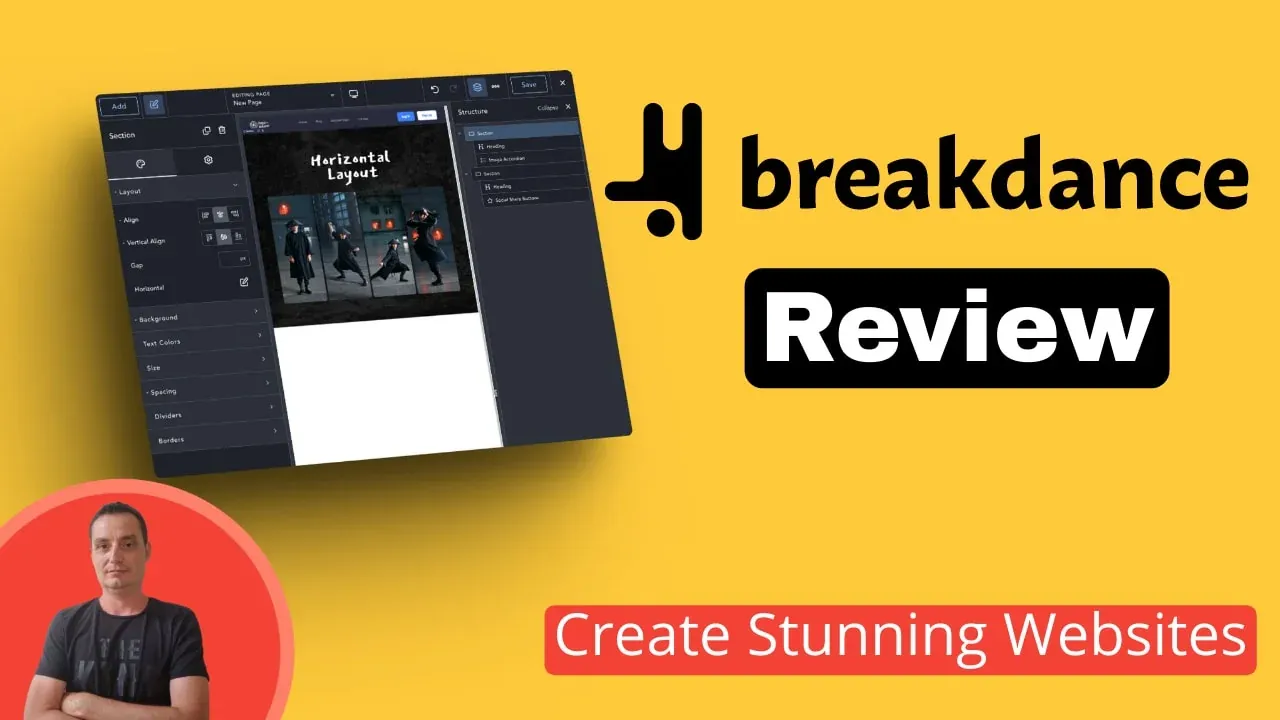
Breakdance is a WordPress page builder from Soflyy, the same team behind Oxygen Builder and WP All Import. It launched in 2023 and is now on version 2.6 (released December 2025). I’ve been using it on a few sites and here’s what I actually think.
What is Breakdance?
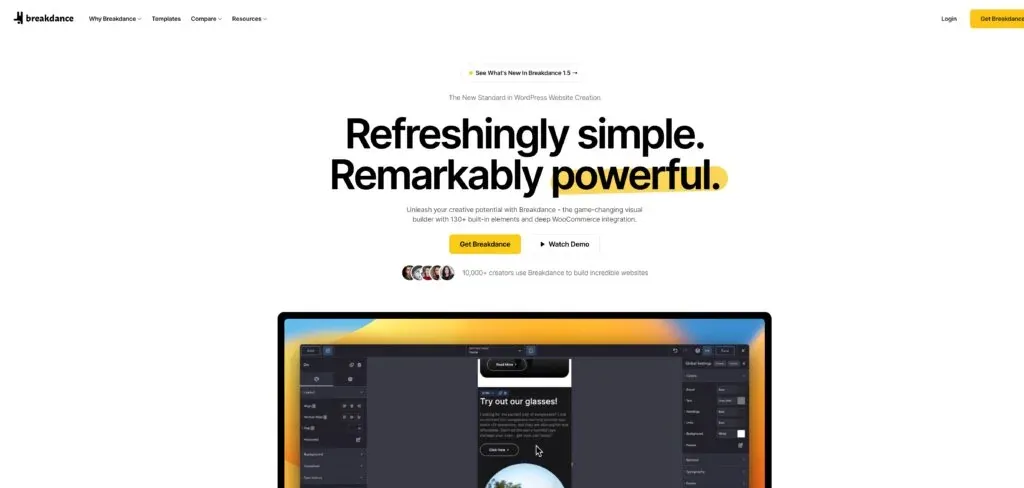
Breakdance is a full site builder — not just a page builder. You use it to control the header, footer, archive templates, blog layouts, and individual pages. It runs on React, which makes the editor feel snappy. Changes preview in real-time without page reloads.
It works with any WordPress theme, but most people disable the active theme and let Breakdance handle everything. It ships with 145 elements in the Pro version and connects to WooCommerce, ACF, and popular email marketing services.
Try BreakdanceWho built it?
Soflyy has been building WordPress products for over 15 years, with 200,000+ active installations across their tools. Louis Reingold leads development. They built Oxygen first, then Breakdance as a more accessible version with a better UI, bigger template library, and a flatter learning curve.
What can you build with it?

Pretty much anything: blogs, WooCommerce stores, membership sites, landing pages, portfolios. Dynamic data support means you can loop over posts, use ACF fields in templates, and display conditional content based on user roles or post categories. That’s where Breakdance pulls ahead of simpler builders.
Pricing
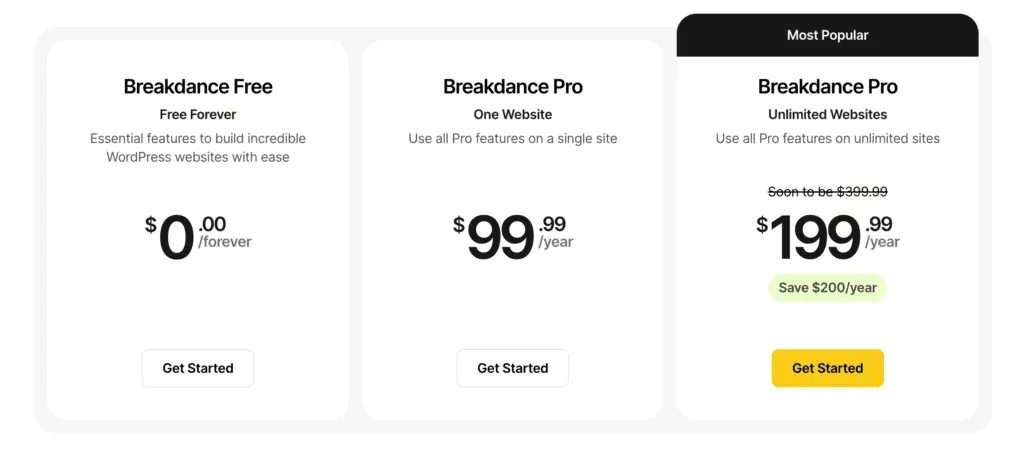
Current pricing (2026):
- Free — unlimited sites, 80 elements, limited design library, basic WooCommerce
- Pro 1 site — $99.99/year, 145+ elements, full everything
- Pro unlimited — $199.99/year (going up to $399.99, so locking in now saves money)
- Pro + AI Bundle — $249.99, includes AI content writing tools
- 60-day money-back guarantee, no questions asked
The unlimited plan at $199.99/year costs less than half of what Elementor Pro charges for unlimited sites ($499/year). If you build client sites, the math is straightforward.
How it works
Setup
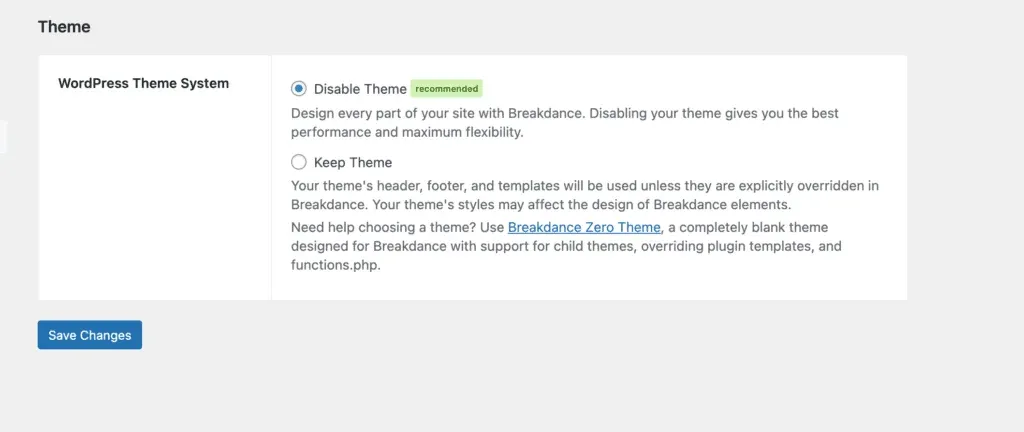
On first install you choose whether to keep your WordPress theme or disable it. Disabling it gives you a clean canvas and avoids CSS conflicts. For most people, disabling the theme is the right call.
Global styles
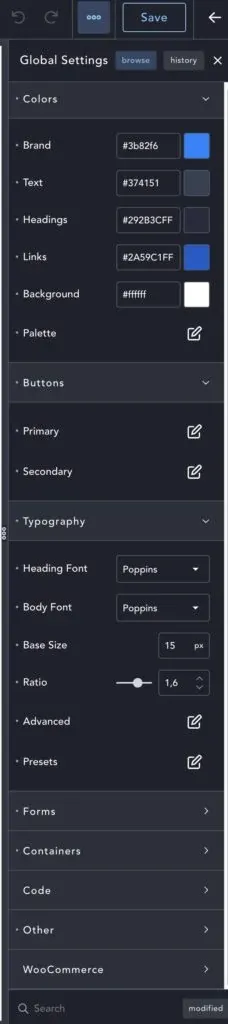
Set brand colors, typography, button styles, and container defaults once and they apply across the whole site. This is the right way to build — consistent design without manually touching every element.
Headers and footers
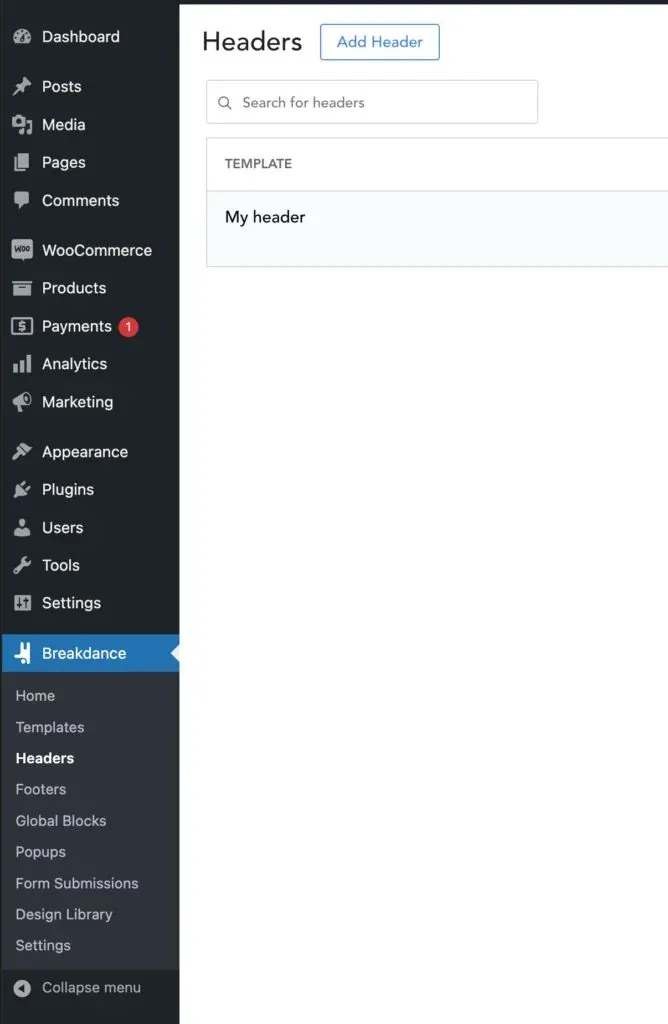
The header builder handles dropdown menus and mega menus without extra plugins. You can assign different headers to different page types. Building a multi-level nav takes minutes here.
Forms, popups, dynamic data
Built-in form builder with 14+ field types, conditional logic, spam protection, and direct integrations with Mailchimp, ConvertKit, and others. No need for a separate forms plugin on most sites. Popups are also built in.
Dynamic data comes from WordPress core fields, custom post types, and ACF. The Post Loop Builder lets you display grids, lists, or sliders of posts filtered by category, tag, or custom query. Version 2.5 added masonry layout support for loop elements.
What’s new in version 2.6
The December 2025 update brought a few things worth mentioning:
- Button presets — create reusable button styles and apply them across elements
- Rebuilt code editor — now powered by CodeMirror 6 with Emmet support, autocomplete, and a color picker
- Design preset history — version control for your design presets, so you can roll back changes
- Performance improvements — faster loading and smoother editor response
- Better integrations — improved compatibility with The Events Calendar, WooCommerce variation swatches, and WPCodeBox
Client editing
Breakdance has a “User Access” mode that lets clients edit content without touching styling. Works well for handing off a finished site.
Integrations
- WooCommerce (full product/shop/cart/checkout templates in Pro)
- ACF and custom fields
- Yoast SEO, Rank Math, SEOPress
- Mailchimp, AWeber, ConvertKit, ActiveCampaign
- Zapier/IFTTT via webhooks
- WP Grid Builder for filtering
Performance
React-based editor, smart asset loading per page, lazy loading for images. Clean output. Breakdance only loads CSS and JS for the elements you actually use on each page. In my testing it scores well on Core Web Vitals, and version 2.6 improved this further with faster PHP rendering and optimized CSS loading.
Breakdance vs the alternatives
vs Gutenberg: Gutenberg needs a block library, full site editing plugins, and developer time to reach what Breakdance does out of the box. For anything beyond a basic blog, Breakdance wins on speed of development.
vs Elementor: Elementor has a bigger ecosystem and more third-party addons. Breakdance produces cleaner code and costs less. If you don’t need the Elementor addon ecosystem, Breakdance is the better technical choice.
vs Oxygen: Oxygen is more developer-focused and gives more low-level control. Breakdance has a better UX and better templates. It’s basically Oxygen rebuilt for a wider audience. Oxygen still exists and is actively developed, but for most use cases Breakdance is the upgrade.
vs Bricks: Close competition. Bricks has a strong developer community and works as a theme, which limits migration. Breakdance runs as a plugin so switching existing sites to it is easier. Both work well for advanced users.
My experience
I moved wpdoze.com to Breakdance and built the custom header, footer, and post layout from scratch. Took a few hours total. Posts stay in Gutenberg — Breakdance handles the site chrome and templates only. The separation works well.
I’ve also used it for a few client sites. Building goes fast once you have global styles set. The main thing I’d like to see is a bigger community template library — there’s a design library but it’s still smaller than Elementor’s. Everything else works well.
Verdict
Breakdance is worth using. It’s fast, produces clean code, and covers everything a typical WordPress project needs. The unlimited plan at $199.99/year is fair for agencies. The free version has 80 elements and no time limit — enough to evaluate it properly before paying.
If you’re starting a new project or frustrated with Elementor’s bloat, give it a try.